Single- and two-conductor sheathed cables: The foundation for your heating solution.
Mineral-insulated heating cables—single-conductor or twin-conductor? This fundamental decision affects the voltage level, power range, and connection configuration of your heating solution. Single-conductor versions are particularly suitable for higher voltages and power levels, while twin-conductor cables are ideal for low voltage, lower power, and single-sided connections.
Both designs follow the same principle: inner wires embedded in highly compacted magnesium oxide and enclosed in a metal sheath enable efficient, robust, and evenly distributed heat transfer. The choice of stainless steel or Inconel determines the maximum possible operating temperature.
This article explains the construction, operating principles, technical specifications, and typical operating limits. Tables, material guidelines, and calculation formulas will help you select and design the appropriate heating conductor—from determining resistance to calculating heat output.
Hi, from Stapelfeld.
At the start of every electric heating solution lies a fundamental decision: single-wire or two-wire? The answer depends on your application, the available voltage, and the design constraints. While single-wire, mineral-insulated jacket heating cables are operated at high voltage and high power, two-wire versions excel in low-voltage applications, at low power levels, and when connections are made at one end of the jacket heating cable.
Both designs are based on the same robust principle: one or two inner conductors, insulated by highly compacted magnesium oxide (MgO) and protected by a metallic outer sheath. The result is a high-performance sheathed heating conductor that can be bent, coiled, and inserted into grooves.
In this article, you'll find technical specifications, product tables, and design guidelines for both variants. From material selection and resistance values to heating capacity calculations—here, we lay the foundation for your perfect heating solution.
Ready? Then let's get into the details.
Basic Structure and Operating Principle.
Mineral-insulated sheathed cables are heating elements consisting of one or two inner conductors (heating wire), a highly compacted magnesium oxide (MgO)insulation, and a metallicouter sheath. They are manufactured on rolls and cut to length depending on the application. A 1-core or 2-core mineral-insulated sheathed cable has no cold ends, which means that the cable is heated uniformly along its entire length.
Principle of operation:The electrical resistance of the live inner conductor generates heat. The magnesium oxide electrically insulates the live conductor from the jacket and conducts the heat outward very efficiently. This enables rapid and uniform heat transfer. The jacket protects against mechanical stress and various environmental influences.
Heating Power:The specific heating power (W/m) is primarily determined by thewire resistance (ohms/m)and the applied voltage. The formulaP = U² / Rapplies, where R is the total resistance of the heating conductor length. A lower wire resistance results in higher power output at the same voltage.
Single-conductor, mineral-insulated sheathed cables.
Single-conductor mineral-insulated sheathed cables havealive inner conductor. It is cut to the desired length as a mineral-insulated sheathed heating cable for the specific application. Thanks to their flexible design, they can be bent and laid in a wide variety of ways, with the connection ends located at both ends of the sheathed heating cable. It has no cold ends.
Technical Specifications:
- Application Focus:Often designed for higher voltages up to 360 V and power ratings up to several kilowatts.
- To be custom-made as a single-core jacket heating conductor to the desired length.
- Heat is transferred evenly along the entire length; there are no cold ends.
- The jacket heating conductor can be installed in a bifilar, meandering, coiled, or straight configuration.
- The electrical connections are located at both ends of the sheath-heating conductor.
- Can be used with all installation methods. (LINK to installation methods)
Mineral-insulated sheathed cable (single-conductor).
Casing material: Stainless steel 1.4541 (max. operating temperature 600°C)
| Designation | Outer Diameter (mm) | Number of cores | Conductor resistance (ohms/m @ 20°C) |
| 1NICrV05 | 0,5 | 1 | 50 |
| 1NICrV10 | 1,0 | 1 | 12 |
| 1NiCrV15 | 1,5 | 1 | 6 |
| 1NiCrV15-22 | 1,5 | 1 | 22 |
| 1NiCrV20 | 2,0 | 1 | 3 |
| 1NiCrV30 | 3,0 | 1 | 1,4 |
| 1NiCrV32 | 3,2 | 1 | 4 |
| 1NiCrV32-6 | 3,2 | 1 | 6,3 |
| 1NiCrV36 | 3,6 | 1 | 2,5 |
| 1NiCrV40 | 4,1 | 1 | 1 |
| 1NiCrV45 | 4,5 | 1 | 0,63 |
| 1NiCrV50 | 5,0 | 1 | 0,4 |
Casing material: Inconel 600 / 2.4816 (max. operating temperature 1000°C)
| Designation | Outer Diameter (mm) | Number of cores | Conductor resistance (ohms/m @ 20°C) |
| 1NICrI05 | 0,5 | 1 | 50 |
| 1NICrI10 | 1,0 | 1 | 12 |
| 1NiCrI15 | 1,5 | 1 | 6 |
| 1NiCrI15-22 | 1,5 | 1 | 22 |
| 1NiCrI20 | 2,0 | 1 | 3 |
| 1NiCrI30 | 3,0 | 1 | 1,4 |
| 1NiCrI32 | 3,2 | 1 | 4 |
| 1NiCrI32-6 | 3,2 | 1 | 6,3 |
| 1NiCrI36 | 3,6 | 1 | 2,5 |
| 1NiCrI40 | 4,1 | 1 | 1 |
| 1NiCrI45 | 4,5 | 1 | 0,63 |
| 1NiCrI50 | 5,0 | 1 | 0,4 |
2-wire mineral-insulated sheathed cables.
Two-conductor mineral-insulated sheathed cables havetwoparallel inner conductors that are insulated from each other and from the sheath. They are cut to the desired length as 2-conductor mineral-insulated sheathed heating cables for the specific application. Thanks to their flexible design, sheathed heating cables can be bent and installed in a wide variety of ways. Both inner conductors are welded together at one end of the sheathed heating cable and insulated from the outer sheath, so that both connections are located at one end of the cable. They do not have cold ends.
Technical Specifications:
- Application Focus:Often intended for lower voltages up to 115V and low power ratings.
- The shielding conductor can be laid in a meandering, coiled, or straight configuration.
- To be manufactured as a 2-wire jacket heating conductor, cut to the desired length.
- Heat is transferred evenly along the entire length; there are no cold ends.
- The electrical connections are located at only one end of the sheath heater.
- Can be used with all installation methods. (LINK to installation methods)
Mineral-insulated sheathed cable (2-conductor).
Casing material: Stainless steel 1.4541 (max. operating temperature 600°C)
| Designation | Outer Diameter (mm) | Number of cores | Conductor resistance (ohms/m @ 20°C) |
| 2NiCrV10 | 1,0 | 2 | 82,4 |
| 2NiCrV15 | 1,5 | 2 | 36,6 |
| 2NiCrV20 | 2,0 | 2 | 20,6 |
| 2NiCrV24 | 2,4 | 2 | 19 |
| 2NiCrV30 | 3,0 | 2 | 9,1 |
| 2NiCrV32 | 3,2 | 2 | 11 |
| 2NiCrV48 | 4,8 | 2 | 4,6 |
Casing material: Inconel 600 / 2.4816 (max. operating temperature 1000°C)
| Designation | Outer Diameter (mm) | Number of cores | Conductor resistance (ohms/m @ 20°C) |
| 2NiCrI10 | 1,0 | 2 | 82,4 |
| 2NiCrI15 | 1,5 | 2 | 36,6 |
| 2NiCrI20 | 2,0 | 2 | 20,6 |
| 2NiCrI24 | 2,4 | 2 | 19 |
| 2NiCrI30 | 3,0 | 2 | 9,1 |
| 2NiCrI32 | 3,2 | 2 | 11 |
| 2NiCrI48 | 4,8 | 2 | 4,6 |
Important Technical Information for Users. Selection of jacket material:
- Stainless Steel 1.4541:A titanium-stabilized, austenitic chromium-nickel steel alloy. Good corrosion resistance and good resistance to steam and combustion gases. Suitable for operating temperatures up to600°C.
- Inconel 600 (2.4816):A nickel-chromium alloy with excellent resistance to oxidation and corrosion at high temperatures. Ideal for applications at temperatures up to1000°C.
Tolerances:
The tolerances listed refer to the tables above for 1-core and 2-core mineral-insulated sheathed cables. Outer diameter: +/- 0.10 mm– This must be taken into account when designing grooves or holes for the heating conductors to ensure good heat transfer.
- Resistance: +/- 10%—This tolerance must be taken into account when calculating the required heating power. The actual power may differ from the rated value accordingly.
Packaging:
The mineral-insulated cables can be purchased by the meter or as ready-to-use assemblies with connectors. Depending on the required power, it is recommended to assemble the cables with transition sleeves on the attached cold endsto prevent overheating at the connection points. The cold ends are sections with negligible resistance that concentrate heat generation at the heating element. They remain significantly cooler when voltage is applied.
In addition, metal-ceramic power connections are available for particularly demanding applications. A mineral-insulated sheathed heating conductor with transition sleeves and attached cold ends can also be assembled with an appropriate connection cable if the distance to the power source is significantly longer.
Calculating Heating Capacity:
The formulaP = U² / Ris fundamental to the design:
- P = Heating power in watts (W)
- U = Applied voltage in volts (V)
- R = Total resistance in ohms (Ω), calculated as R = wire resistance (ohms/m) × length (m)
Sample calculation:A 10-meter-long 1NiCrV30 heating wire (wire resistance 1.4 ohms/m) at 230 V:
- R = 1.4 ohms/m × 10 m = 14 ohms
- P = 230² / 14 = 3.778 W ≈ 3.8 kW ()
Summary
Single- and two-conductor mineral-insulated sheathed cables offer flexible, robust, and temperature-resistant solutions for industrial heating applications. The choice between single- and two-conductor versions depends on the voltage requirements, power density, and installation method. The choice of sheath material (stainless steel vs. Inconel) is determined by the maximum operating temperature and environmental conditions. Proper assembly with transition sleeves and attached cold ends, power connectors, or connecting cables is crucial for reliable and safe operation.
More information that might interest you
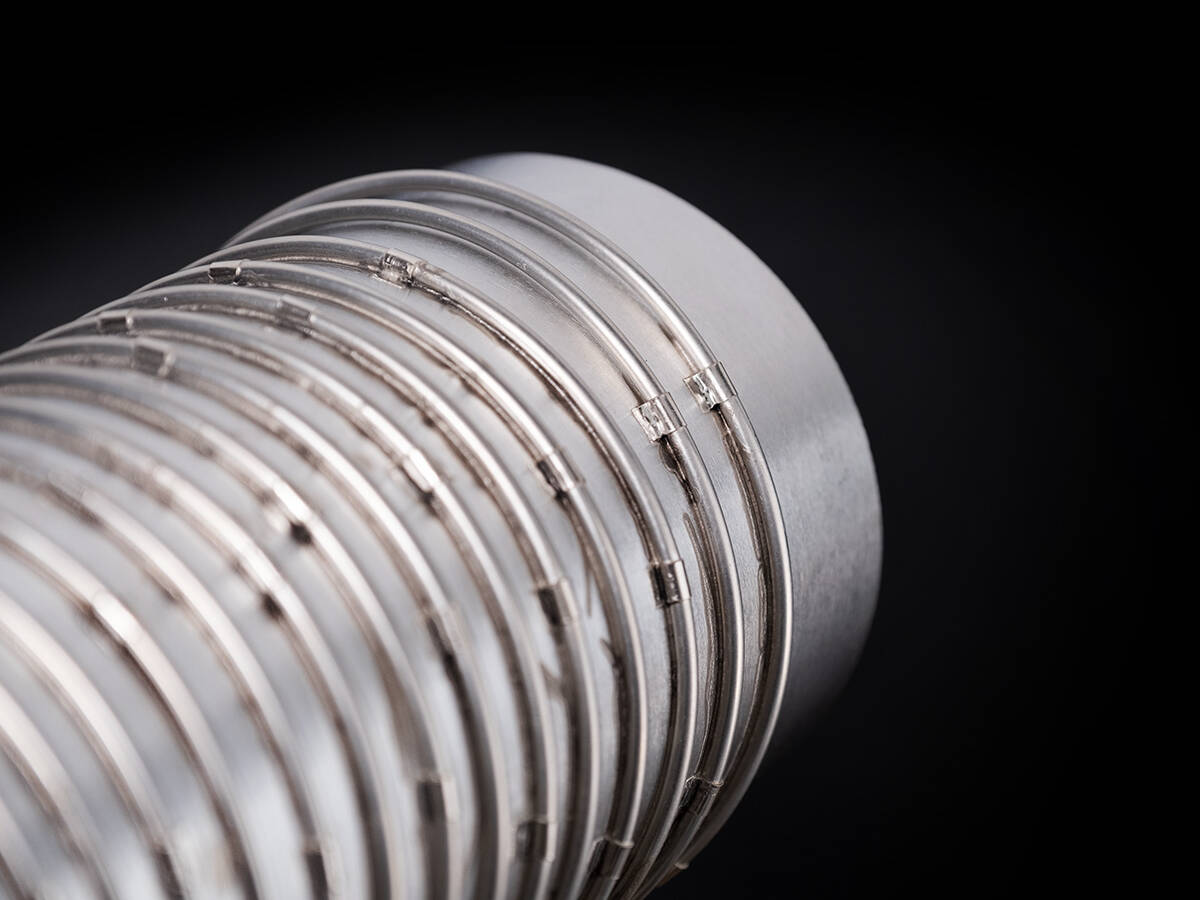
Installation Methods for Sheath Heating Cables
This is the excerpt for the preview and the preview text at the top
0 Comments8 Minutes
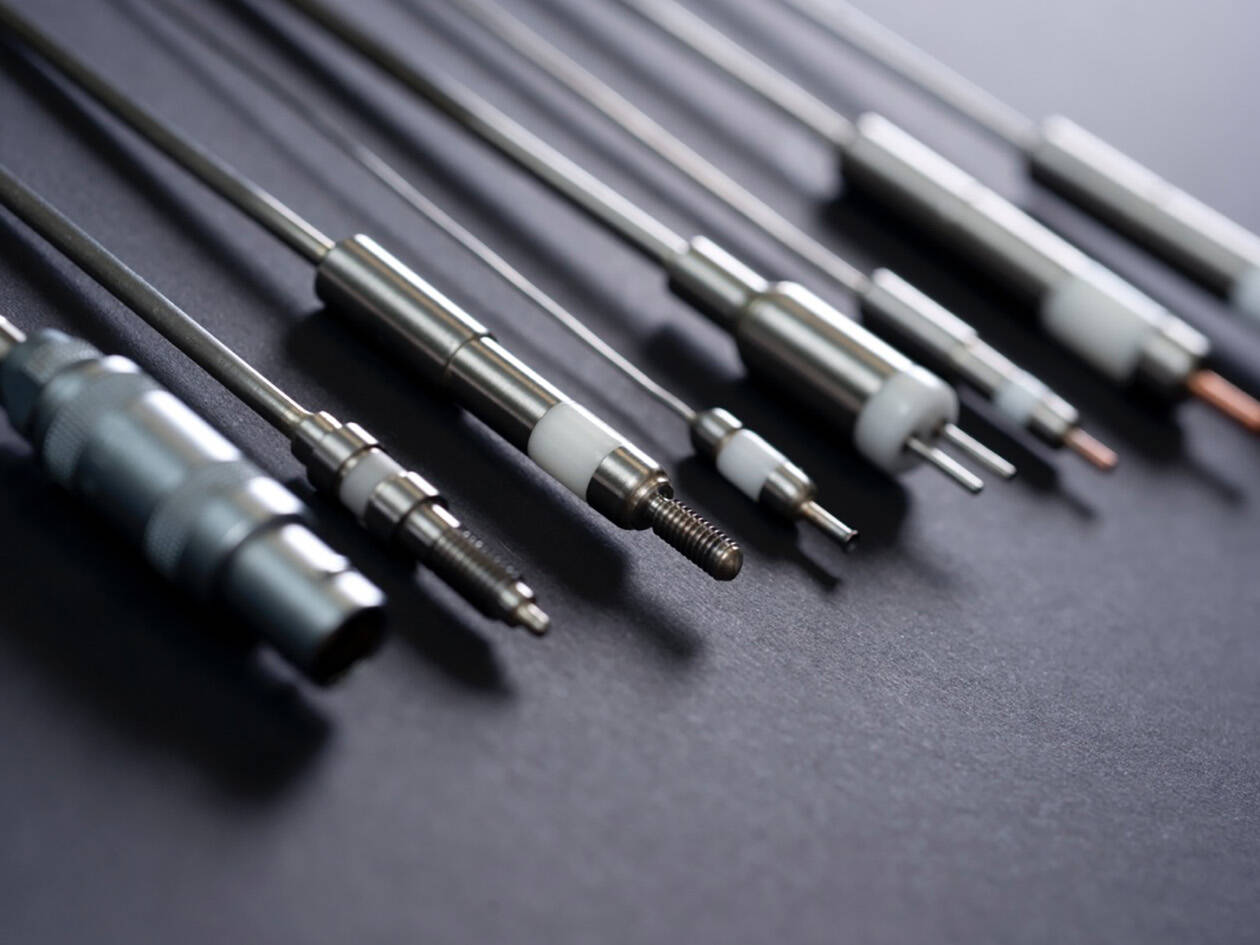
Connections, Installation, and Quality Assurance: From Heating Cables to Reliable Heating Solutions.
This is the excerpt for the preview and the preview text at the top
0 Comments5 Minutes
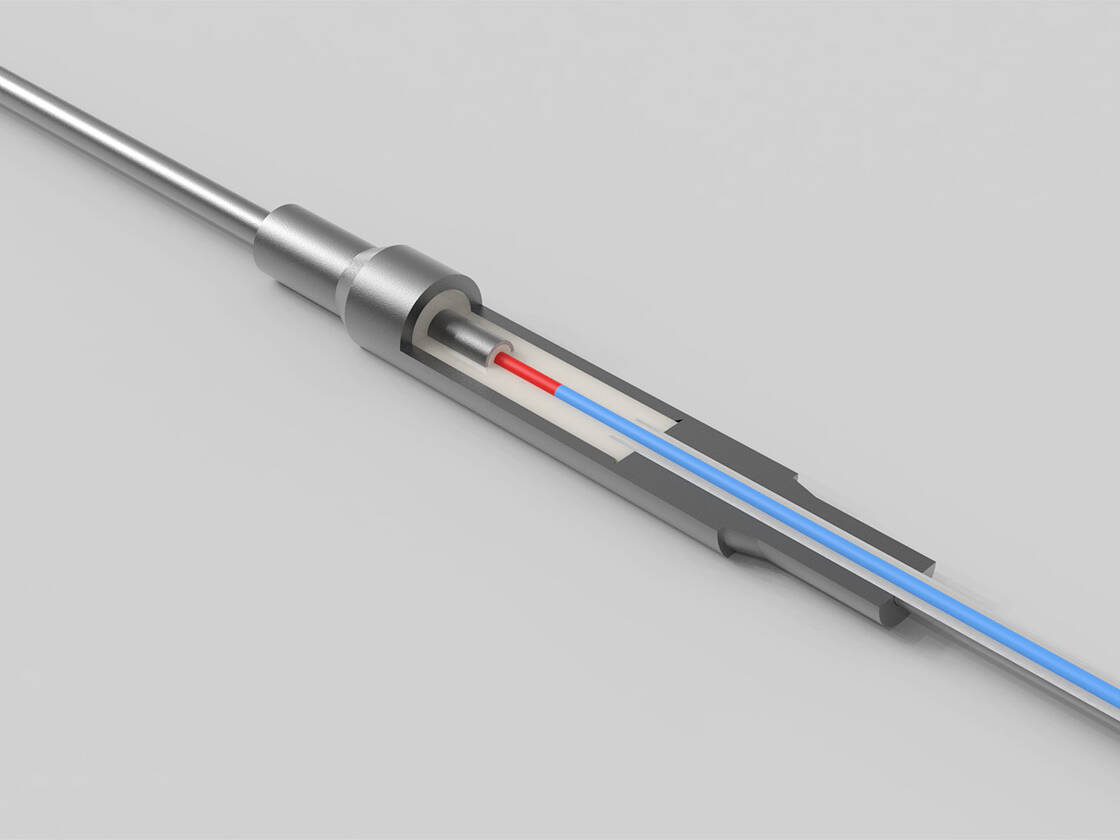
Mineral-insulated sheathed heating cables with attached, seamless cold ends
Mineral-insulated heating cables without cold ends can be used reliably up to about 400 °C. If…
0 Comments9 Minutes
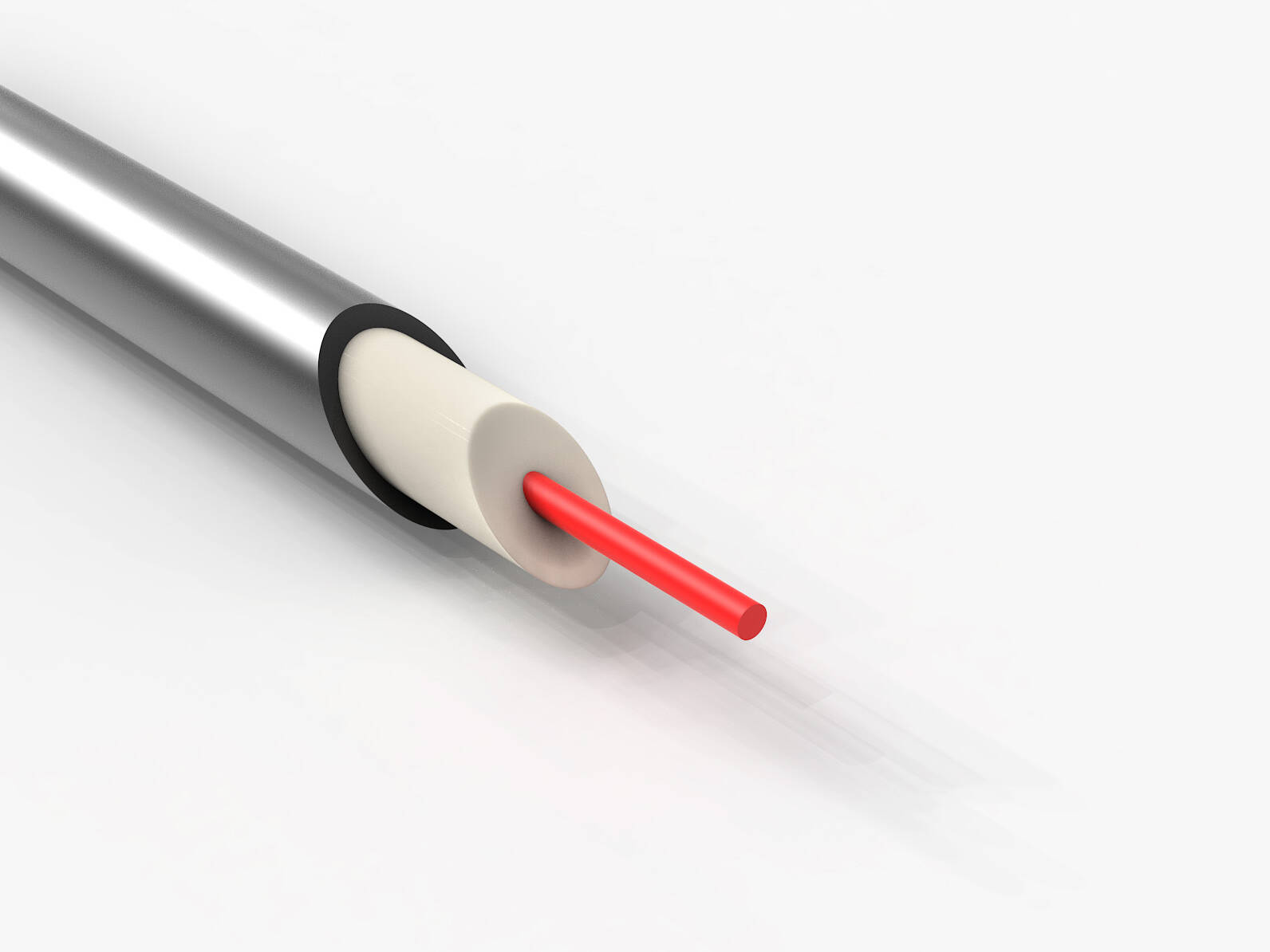
Mineral-Insulated Sheathed Heating Cables: Technical Guide for Technicians & Engineers.
In demanding industries such as aerospace, semiconductor technology, and high-end mechanical engineering…
0 Comments10 Minutes
How to Calibrate a Thermocouple Correctly – A Practical Guide.
How to Calibrate Thermocouples Correctly! A practical guide with methods, tips, and…
0 Comments6 Minutes
How to Choose the Right Thermocouple – A Guide for Industry.
Which Thermocouple Is Right for You? A Practical Guide to Types, Materials, &…
0 Comments7 Minutes
Focus on Thermocouples – Why Precise Temperature Measurement Is Important.
Accurate temperature measurement is not just an option—it is essential. Thermocouples are far…
0 Comments5 Minutes